Hvem daterte Lord Byron?
Augusta Leigh datert Lord Byron fra ? til ?. Aldersforskjellen var 4 år, 11 måneder og 27 dager.
Jane Harley, Countess of Oxford and Countess Mortimer datert Lord Byron fra ? til ?.
Claire Clairmont datert Lord Byron fra ? til ?. Aldersforskjellen var 10 år, 3 måneder og 5 dager.
Margarita Cogni datert Lord Byron fra ? til ?.
Teresa, Contessa Guiccioli datert Lord Byron fra ? til ?.
Lord Byron

George Gordon Byron, 6. baron Byron, vanligvis omtalt som lord Byron, (1788–1824) var en engelsk poet og ledende figur i den romantiske bevegelse på begynnelsen av 1800-tallet. Blant Byrons mest kjente verker er de lange fortellende diktene Don Juan og Childe Harold's Pilgrimage, og det korte lyriske stykket She Walks in Beauty. Han er ansett som en av de store britiske poeter og har forblitt meget lest og innflytelsesrik.
I 1816 forlot han sitt hjemland etter en skandaleombrust skilsmisse, og vendte siden aldri tilbake. Han reiste østover i 1823 for å delta i den greske frihetskampen mot den osmanske undertrykkelsen av Hellas. Av den grunn er han blitt anerkjent av grekerne som en nasjonalhelt. Han døde av smittefeber i Messolonghi i en alder av 36 år. Selv om han reiste en privat hær og ikke fikk større innvirkning på krigen, var hans deltagelse og ikke minst for tidlige død, avgjørende faktorer for å gi den greske saken oppmerksomhet i Vesten. Han skrev på sitt hovedverk, den store samfunnssatiren Don Juan i årene 1819–1824, men rakk ikke å fullføre det helt.
Han var far til Ada Byron Lovelace, kjent for sin store matematiske innsikt og en pioner innenfor programmering av datamaskiner. Byrons kone og Adas mor, Annabella (Anne Isabella), var en begavet matematiker. Ekteskapet var ulykkelig og ble oppløst året etter at Ada ble født. Offentligheten sympatiserte med Annabella og Ada, og Byron forlot Storbritannia og kom ikke tilbake i live. Byron ble feiret og omtalt i sin levetid for sin aristokratiske utsvevelser, inkludert store gjeld, tallrike kjærlighetsaffærer, rykter om en skandaløs incestuøs forbindelse med sin halvsøster, og selvpåførte landflyktighet. Påstandene om forhold til halvsøsteren ble ikke bevist.
Som poet var Byron i all vesentlighet lyriker. Hans styrke lå i retorikkens fargeprakt, i de ypperlige naturskildringene og i tonegangenes mangfold som gjorde mulig for ham med lekende velbehag, bitende satire eller harmløs humor å gå fra den høyeste patos til den trivielle virkelighet. Hans figurer lider derimot av en viss ensformighet ved at de ligner mer eller mindre på hverandre, og er formet etter hans eget vesen. Mer mangfoldig er hans galleri av kvinner. Hans dramaer fungerer gjennom fortellingens prakt og dens tankeinnhold, mindre gjennom karakter og handling. Byron ble satt mer pris på i utlandet enn i England, noe som har sin årsak både i hans skarpe kritikk av de engelske samfunnsforholdene og at hans poesi ikke var perfekte. Særlig i begynnelsen ble det rettet kritikk mot hans teknikk, blant annet av Algernon Swinburne.
Byron ble født i London og vokste opp i Aberdeenshire. Ti år gammel arvet han godset Newstead Abbey og lord-tittel etter en grandonkel. Han var som unggutt betatt av Mary Ann Chaworth (1786-1832) arving til Annesley Hall som var nabogodset til Newstead Abbey. Hun giftet seg istedet med John Musters noe som ga opphav til navnet Charworth-Musters. Chaworth-Musters var på den tiden en av de mektigste i Nottinghamshire. Lord Byrons dikt «The Dream» omhandler hjemstedet i Nottinghamshire og Mary Ann.
Sommeren 1816 var Byron i Geneve sammen med John Polidori, Percy Bysshe Shelley, Mary Godwin og hennes stesøster Claire (Clara Mary Jane) Clairmont. Det var i selskap med disse i Villa Diodati ved Genevesjøen i juni 1816 at Mary Godwin (senere gift Shelley) fikk ideen til Frankenstein. Claire Clairmont og Byron var trolig elskere i England og hun ville fortsette forholdet. Clairmont ble gravid og fødte Allegra Byron i 1817. Clairmonts far var John Lethbridge og hennes stefar var William Godwin. Percy Bysshe Shelley og Byron kjente ikke hverandre før oppholdet i Geneve og ble etterhvert venner og fortrolige.
Les mer...Augusta Leigh
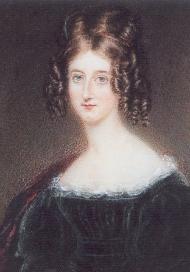
Augusta Maria Leigh (née Byron; 26 January 1783 – 12 October 1851) was the only surviving daughter of John "Mad Jack" Byron, the poet Lord Byron's father, by his first wife, Amelia, née Darcy (Lady Conyers in her own right and the divorced wife of Francis, Marquis of Carmarthen).
Les mer...Lord Byron
Jane Harley, Countess of Oxford and Countess Mortimer

Jane Elizabeth Harley, Countess of Oxford and Countess Mortimer (née Scott; 1774–1824) was an English noblewoman, known as a patron of the Reform movement and a lover of Lord Byron.
Les mer...Lord Byron
Claire Clairmont

Clara Mary Jane Clairmont (27 April 1798 – 19 March 1879), commonly known as Claire Clairmont, was the stepsister of English writer Mary Shelley and the mother of Lord Byron's daughter Allegra. She is thought to be the subject of a poem by Percy Bysshe Shelley.
Les mer...Lord Byron
Margarita Cogni
Lord Byron
Teresa, Contessa Guiccioli
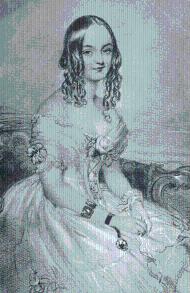
Teresa, Contessa Guiccioli (1800–1873) was an Italian noblewoman and the married lover of Lord Byron while he was living in Ravenna and writing the first five cantos of Don Juan. She wrote the biographical account Lord Byron's Life in Italy.
On 19 January 1818, Teresa married an elderly diplomat, Count Alessandro Guiccioli, who was 39 years her senior. It was three days later, on 22 January, that she met Lord Byron at the home of Countess Albrizzi. Count Guiccioli was a nobleman who had ingratiated himself with Napoleon during his campaign in Italy in 1796, and during the French rule of Italy during the Napoleonic era, Count Guiccioli held a series of high offices, making him one of the most powerful men in Italy. There is no evidence that Teresa, his third wife, ever felt any affection for him.
Byron's relationship with Teresa was a dangerous one as Count Guiccioli was still a powerful man who was widely believed to have been behind the murder in 1816 of another nobleman who was suing him for having seized his lands under Napoleon. In a letter to her sent on 22 April 1819 written in Italian, Byron wrote "you sometimes tell me I have been your first real love-and I assure that you shall be my last Passion". In a letter, Byron wrote that she mailed him some of her pubic hair, which was a traditional Italian gesture that indicated her willingness to begin an affair. The Countess Guiccioli lived with Byron as his common-law wife first in Ravenna and then in Genoa until 1823.
Her father, Count Ruggiero Gamba was an Italian nationalist who wanted to unify all of the Italian states into one, a project that would also mean the Austrian Empire, which ruled much of what is now northern Italy (the Kingdom of Lombardy-Venetia) would also lose much territory. Under Teresa's influence, Byron joined a secret pseudo-Masonic society dedicated to Italian unity and driving out the Austrians that had already been joined by her father and brother. For plotting against the Austrian Empire, Count Gamba was exiled to the countryside of the Romagna region. In 1823, the Austrian authorities allowed Count Gamba to leave his exile in the Romagna with the condition that the Countess Guiccioli had to end her relationship with Byron and return to her husband. The news that the Countess Guiccioli was leaving him helped precipitate Byron's decision to go fight on the Greek side in the Greek war of independence. When Byron boarded the Hercules, the ship that was to take him from Genoa to Greece, it caused "passionate grief" from Guiccioli who broke down in tears as she said farewell to her lover. Going along with Byron to Greece was her brother, Pietro Gamba, who was to serve as Byron's bumbling right-hand man.
Later in life, she married the Marquis de Boissy who, even after their marriage, boasted of her liaison with Byron, introducing her as "Madame la Marquise de Boissy, autrefois la Maitresse de Milord Byron" (the Marquise de Boissy, formerly the mistress of Lord Byron).
Alexandre Dumas included her as a minor character in his novel The Count of Monte Cristo using the disguised name "Countess G-". Lord Byron also used this shortened name in his journals. At a party in Paris hosted by Napoleon III in the 1860s, the wife of the American ambassador introduced a wealthy American tourist, Mrs. Mary R. Darby, to the now elderly Contessa Guiccioli, saying she was one of the last people alive who knew Byron personally. Mrs. Darby introduced herself by saying that she had heard Byron was "king of poets", only for Guiccioli, who was still in love with him, to say that Byron was the "king of men". Mrs. Darby befriended Guiccioli who showed her two manuscripts that she had written in French, recalling her youth with Byron. Mrs. Darby, who quickly became Guiccioli's best friend, worked with her on turning the manuscripts into books, only one of which has survived. When the Contessa Guiccioli died in 1873 with no children, her papers were inherited by her grand-nephew, Count Carlo Gamba, who hid them away in his family's archives, believing that his grand-aunt's scandalous relationship with Byron would damage the reputation of the Gamba family. Not until 2005 was one of the books the Contessa Guiccioli wrote about her relationship with Byron published.
Les mer...