Hvem daterte Люси Хей, графиня Карлайл?
Thomas Wentworth datert Люси Хей, графиня Карлайл fra ? til ?.
John Pym datert Люси Хей, графиня Карлайл fra ? til ?.
Люси Хей, графиня Карлайл
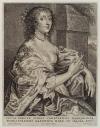
Люси Хэй (урожденная Перси), графиня Карлайл (1599 — 5 ноября 1660) (eng. Lucy Hay, Countess of Carlisle, née Percy) была придворной дамой, известной своей красотой и остроумием. Она принимала участие во многих политических интригах во время английской гражданской войны (англ. English Civil War).
В 1626 году назначена камер-фрейлиной королевы Англии Генриетты Марии.
Les mer...Thomas Wentworth
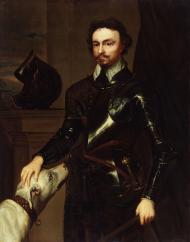
Thomas Wentworth, 1. jarl av Strafford, (født 1593, død 12. mai 1641) var en engelsk statsmann. Han var først medlem av Underhuset fra 1613 og ble senere den første jarl av Stafford fra 1640. Wentworth støttet i begynnelsen parlamentsopposisjonen mot Jakob I av England og Karl I av England, men ble likevel en av kong Karl 1s viktigste tilhengere da han ble utnevnt til viktige statlige embeter som stattholder i nord (1628) og til medlem av det Kongelig råd (1629). Wentworth støttet en eneveldig politikk, og ble oppfattet som en av Parlamentets viktigste motstandere i første fase av revolusjonen.
Han falt senere ut av kongens nåde og ble dømt til døden og så henrettet i 1641.
Les mer...Люси Хей, графиня Карлайл
John Pym
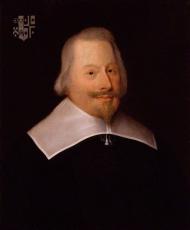
John Pym (20 May 1584 – 8 December 1643) was a politician from Somerset who played a key role in establishing the modern English Parliamentary system. One of the Five Members whose attempted arrest in January 1642 was a major step in sparking the First English Civil War, his use of procedure to outmanoeuvre opponents was unusual for the period. Though this meant he was respected by contemporaries rather than admired, in 1895 historian Goldwin Smith described him as "the greatest member of Parliament that ever lived".
Pym's father died when he was seven months old, and he was raised by his stepfather Sir Anthony Rous, from whom he inherited his Puritan views and deep opposition to Archbishop Laud's reforms. He was also a leading member of the Providence Island Company, which attempted to establish a Puritan colony in Central America.
Described as 'a true revolutionary', he led the opposition to arbitrary rule first under James I, then Charles I. His leadership in the early stages of the war was essential to the Parliamentarian cause, particularly his role in negotiating the Solemn League and Covenant with the Scots Covenanters; his death from cancer in December 1643 was considered a major blow.
Originally buried in Westminster Abbey, after the Stuart Restoration in 1660, his body was dumped in a pit at nearby St Margaret's, Westminster along with those of other Parliamentary leaders. Though his reputation later suffered in comparison to less complex figures like John Hampden and Viscount Falkland, he is now viewed as an astute politician and effective speaker. Many of his ideas were adopted by Patriots during the American Revolution and 19th-century American liberals.
Les mer...